Find the right upland hunting brush pants designed to resist briars, protect your legs, and keep you moving through thick fields. This guide compares five top options for varied needs—durability, mobility, and weather resistance—so you can pick the pair that matches your typical terrain and hunting style. The top picks below are best for hikers, pheasant and quail hunters, and turkey or dove hunters who traverse brush country.
Buyer snapshot: the following table highlights who each pant is best for and a quick note on why it stands out.
| Product | Best For | Why It Stands Out |
|---|---|---|
| Guide Gear Upland Brush Pants | Budget-conscious hunters seeking breathability | 100% cotton body with double overlays for extra protection |
| King’s Camo Field Pant | Upland treks through thick brush in moderate temps | Heavy-duty cotton canvas with briar-resistant panels |
| NEW VIEW 3.0 Upland Pants | Hard-use hunting across thorny terrain | 900D Oxford with briar overlays for rugged durability |
| Browning Upland Denim Pant | Denim lovers needing simple, sturdy pants | Cotton canvas with briar-resistant overlays |
| Gamehide Briar-Proof/Field Chaps | Severe brush and thorny environments | Triple-layer wear cuffs and quick-on/off design |
Guide Gear Men’s Upland Brush Hunting Pants

Best for budget-conscious hunters who still want reliable protection. The pant body is 100% cotton for breathability, with 100% polyester double overlays on the front and calves to reinforce high-wear areas. Built with knee darts and a relaxed fit to improve range of motion. Choose this if you need an affordable option that balances airflow with added brush protection.
Best-for: Upland walkers who move quickly through fields and need airflow without sacrificing core protection. Limitation: cotton fabric, while breathable, may offer less water repellence in wet conditions compared with synthetic blends.
King’s Camo Field Pant, Khaki

Best for upland treks through brush, cattails, and cornfields in moderate temperatures. The 100% cotton canvas body offers breathability and durability, while briar-resistant paneling reinforces the pant at key contact points for tougher vegetation. Choose this if you hike through dense cover and need sturdy, long-lasting fabric with targeted protection.
Best-for: Hunters who encounter briars and thorns and prefer a khaki option with reinforced panels. Caution: heavier canvas may be less flexible in very hot conditions.
NEW VIEW 3.0 Upland Hunting Pants

Best for serious upland hunters who need long-wearing, rugged pants. Built with 900D Oxford fabric and a 100% cotton main body, reinforced briar-resistant overlays shield against thorny brush. The elastic waistband and relaxed fit prioritize mobility for long field sessions. Choose this for durability and all-day comfort in tough terrain.
Best-for: Birds in thick hedgerows or field edges where protection matters most. Limitation: heavier fabric can be stiffer out of the box and may require break-in time.
Browning Upland Denim Pant
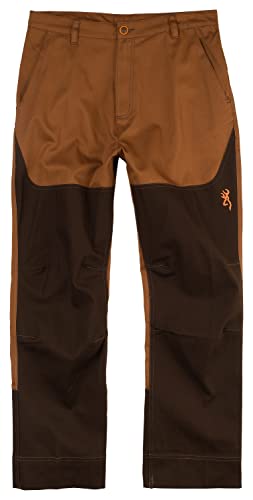
Best for denim enthusiasts who want a simple, reliable upland pant with briar protection. The pant is described as 100% cotton canvas with briar-resistant overlays, delivering a straightforward option that balances durability with ease of movement. Choose this if you prefer a classic look and a no-fruss approach to field wear.
Best-for: Hunters who value familiar materials and a straightforward protective layer. Caution: denim/canvas alternatives may not be as light or breathable as fabric blends in hot weather.
Gamehide Briar Proof Field Pants

Best for rugged, thick brush where you need front-facing protection and durable material. The cotton canvas fabric is paired with reinforced front protection and practical storage features such as slash pockets and a rear pocket for licenses. Quick-on, quick-off chaps can also be paired for extra coverage. Choose this for severe field conditions and ready access to gear.
Best-for: Hunters who frequently push through briars and require secure pockets and durable, exterior protection. Limitation: may feel heavier and warmer in hot climates.
Buying Guide: Key Considerations For Upland Brush Pants
- Protection level: Look for briar-resistant overlays or reinforced panels in high-wear zones to minimize scratch exposure in thorny brush.
- Material balance: Cotton fabrics offer breathability, while canvas and 900D nylon blends boost durability. Consider climate and humidity when choosing.
- Fit and mobility: Elastic waistbands and relaxed cuts improve all-day comfort and reduce fatigue during long hikes through fields.
- Weather resistance: Water-repellent finishes help in dew and light rain, but expect heavier fabrics to dry more slowly.
- Pockets and accessibility: Adequate pocketing supports field tasks and license storage; quick-access features on chaps add versatility.
- Durability vs. weight: Heavier fabrics tend to last longer in briar-heavy terrain but may restrict movement in tight cover.
- Maintenance: Cotton and canvas fabrics can require different care than synthetics; check washing guidelines to preserve overlays.
Frequently Asked Questions
- What are upland brush pants best used for?
They protect legs from briars, thorns, and brush while providing mobility for long field walks. - Should pants be breathable or weatherproof?
Breathability is important for long hikes; weatherproofing helps in damp mornings, but may reduce airflow. - Are briar-resistant overlays worth it?
Yes, overlays shield against scratches and wear in dense cover, extending pant life. - What fabrics should I look for?
A mix of cotton for comfort and durable overlays (canvas or 900D) for protection often works best. - Is a quick-on/off chap useful?
Yes, it allows rapid transitions between field and truck, improving efficiency in changing conditions. - How do I choose the right size?
Check waist measurements and inseam length; a relaxed fit may be more forgiving for layering.
Add a Comment