For cyclists and indoor trainers, monitoring revolutions per minute (RPM) is essential for pacing, endurance, and performance gains. A reliable RPM sensor pairs with popular training apps and bike computers to deliver real-time cadence data, speed, and distance. The following selection highlights five top-rated options compatible with both outdoor bikes and spin bikes, emphasizing Bluetooth and ANT+ compatibility, easy installation, and accurate data capture across apps like Wahoo Fitness, Peloton, Zwift, and more.
| Product | Brand | Key Benefit |
|---|---|---|
| Wahoo RPM Cycling Cadence Sensor | Wahoo Fitness | Dual-band (ANT+/Bluetooth) with broad app compatibility |
| Magene S3+ | Magene | Versatile mode with separate speed or cadence sensor per unit |
| moofit Cadence Sensor Bluetooth/ANT+ | moofit | Real-time cadence data with magnet-free installation |
| Garmin Cadence Sensor 2 | Garmin | Trusted cadence data with Garmin Connect integration |
| COOSPO Cadence and Speed Sensor | CooSpo | 2-in-1 Bluetooth/ANT+ for comprehensive ride data |
Whether you’re training for a multi-hour endurance ride, or simply tracking daily cadence to improve efficiency, these sensors provide precise RPM measurements and effortless syncing with your preferred apps and devices. The list prioritizes sensors that attach quickly to crank arms or hubs, do not require magnets, and offer reliable Bluetooth or ANT+ connections for real-time feedback.
Wahoo RPM Cycling Cadence Sensor
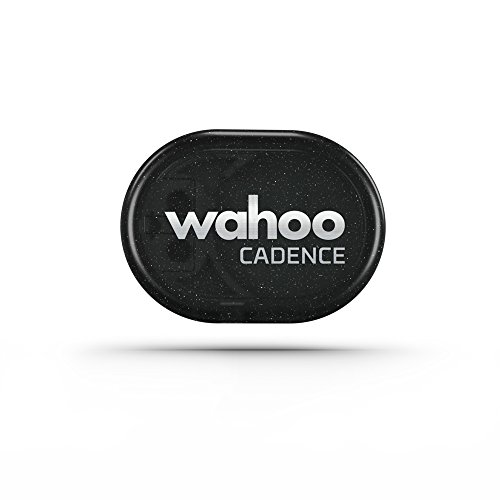
The Wahoo RPM sensor offers precise cadence and speed measurement to support indoor training and outdoor cycling. It uses dual-band technology (ANT+ and Bluetooth Smart), enabling compatibility with smartphones, tablets, bike computers, and a wide range of training apps such as Wahoo SYSTM, RGT, Zwift, and Peloton Digital. The device tracks cadence as revolutions per minute, helping riders optimize their pedal stroke, cadence zones, and endurance rides. Its compact form and magnetic-free installation keep setup simple, with reliable data transfer across devices during workouts.
Real-time data access is a key benefit, letting you monitor cadence live during intervals and adjust effort accordingly. Because it communicates via both ANT+ and Bluetooth, it remains compatible with most ecosystems used by cyclists today. The sensor is also designed to minimize drift and maintain stable connections through typical home Wi-Fi interference and gym environments. For trainers seeking a straightforward, widely compatible cadence sensor, the Wahoo RPM is a dependable option.
Magene S3+ Outdoor/Indoor Sensor
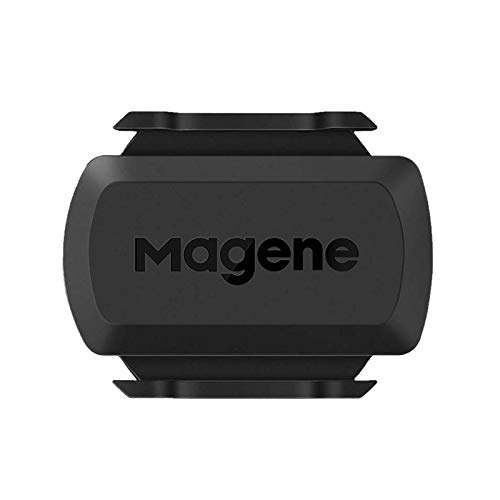
The Magene S3+ provides versatility for both speed and cadence measurements, with a practical approach for cyclists who train across different setups. It supports Bluetooth and ANT+ connections and works with compatible apps and devices such as Onelap, Wahoo Fitness, Zwift, and more. One notable feature is the mode limitation: a single sensor can be set to either speed or cadence, not both simultaneously, so riders considering dual-mode testing may opt for two units. The S3+ is designed for straightforward mounting and reliable signal transmission, ideal for multi-device training scenarios.
As a modular solution, Magene’s system allows you to mix devices across apps, enabling data collection across platforms without being locked to a single ecosystem. This flexibility is valuable for riders who test different bikes, trainers, or devices during a training cycle. If you prioritize compatibility across apps and a robust wireless connection, Magene S3+ stands as a strong contender for a flexible RPM monitoring setup.
moofit Cadence Sensor (Bluetooth/ANT+)

This moofit cadence sensor emphasizes a magnet-free design, making installation quick and clean on crank arms. It supports both Bluetooth and ANT+ connectivity, enabling real-time cadence data to sync with popular apps like Wahoo Fitness, Rouvy, CoospoRide, and Peloton, depending on compatibility. The device claims reliable real-time cadence tracking, helping riders monitor cadence consistency during intervals and steady-state efforts. The sensor’s IP67 rating provides some protection against sweat and moisture, which is practical for regular indoor training and mixed indoor/outdoor use.
With straightforward mounting and broad app compatibility, moofit offers a practical balance between ease of use and data reliability. Riders seeking a compact cadence sensor that integrates well with multiple ecosystems will find moofit to be a sensible choice for RPM monitoring and cadence tracking across workouts.
MOOFIT Speed/Cadence Sensor (2-in-1)

The Moofit 2-in-1 sensor combines speed and cadence data, providing dual-channel data streams for a comprehensive view of ride dynamics. It uses ANT+ and Bluetooth Low Energy (BLE) to connect with bike computers, training apps, and fitness devices. The dual-protocol capability enables synchronization with multiple apps simultaneously in many scenarios, which can be beneficial for multi-device training setups. Mirrors the brand’s emphasis on straightforward installation, attaching to the left crank for cadence and the wheel hub for speed, with IP67-level water resistance for ride durability.
Riders can benefit from real-time cadence and speed metrics during workouts, enabling more precise pacing and better cadence management. If you need a single sensor that covers both cadence and speed without juggling multiple devices, the Moofit 2-in-1 represents a robust option for indoor spin classes and home cycling routines alike.
Garmin Cadence Sensor 2

Garmin’s Cadence Sensor 2 provides reliable cadence data that integrates seamlessly with Garmin Connect and a broad ecosystem of training apps and devices. Its cradle-free design attaches to crank arms of various sizes, delivering consistent pedal stroke information. The sensor uses ANT+ and Bluetooth Low Energy to transmit cadence data, allowing riders to monitor cadence in real time while training indoors or outdoors. Compatibility with multiple Garmin devices makes it a practical choice for riders who already prefer the Garmin ecosystem for data tracking, mapping, and performance analysis.
In addition to cadence data, the Garmin sensor supports robust data sharing with online platforms and fitness equipment, enabling long-term trend analysis. If you value strong brand support, precise cadence metrics, and easy data export to Garmin Connect or compatible apps, Garmin Cadence Sensor 2 is a dependable option for RPM monitoring on any bike setup.
COOSPO Cadence and Speed Sensor
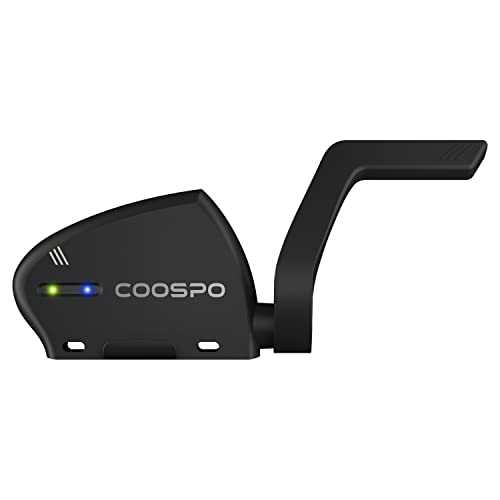
The COOSPO 2-in-1 cadence and speed sensor delivers comprehensive ride data through Bluetooth and ANT+ connectivity. It tracks real-time cadence and speed, providing distance calculations for compatible Android and iOS apps and GPS bike computers. The device emphasizes flexible installation suitable for a wide range of bikes and frames, with adjustable mounting to fit various crank arms and wheel hubs. By supporting multiple app ecosystems, COOSPO offers a practical option for riders who want a single sensor to feed cadence, speed, and distance data into their preferred training software.
Overall, COOSPO’s sensor emphasizes versatility and broad compatibility, enabling riders to capture consistent RPM and speed metrics across different devices. For riders who want a cost-effective, 2-in-1 solution that works with most training apps and devices, COOSPO provides reliable performance for cadence tracking on spin bikes and outdoor cycles alike.
Buying Guide: Key Considerations for RPM Monitors
When selecting a spin bike RPM monitor, consider how you train, what devices you own, and which apps you rely on. Here are essential factors to evaluate:
- Connectivity: Prioritize dual-band sensors with both ANT+ and Bluetooth to maximize compatibility with bike computers, phones, and apps.
- 2-in-1 vs single-purpose: If you primarily need cadence, a cadence-only sensor suffices; for complete ride analytics, a 2-in-1 speed and cadence sensor offers broader data.
- Installation: Magnet-free designs reduce setup time and potential misalignment. Ensure the sensor attaches securely to your crank arm or hub without interfering with pedals.
- App ecosystem: Confirm compatibility with your preferred apps (Zwift, Peloton, Rouvy, TrainerRoad, Garmin Connect, etc.) and whether data exports or cloud syncing are supported.
- Data accuracy and latency: Look for sensors with stable data streams and low latency for real-time pace and cadence adjustments during workouts.
- Durability: IP-rated sensors withstand sweat and occasional moisture; consider models with durable housings for regular training use.
- Battery life: Longer battery life reduces maintenance; check battery type and replacement frequency in case of non-rechargeable options or easy replacements for rechargeable units.
- Compatibility with training goals: If you train for cadence-specific workouts, ensure the sensor accurately reports cadence in the desired RPM ranges and supports cadence zones.
In practice, the best RPM monitor balances broad app compatibility, easy installation, and accurate cadence data. For multisport users, choosing a unit with both ANT+ and Bluetooth ensures you can connect to a wide array of devices and platforms without swapping sensors. If you value brand reliability and ecosystem support, established names like Wahoo, Garmin, and COOSPO offer strong long-term software integration and device compatibility.
Add a Comment