Finding a sturdy, organized way to store shoulder pads is essential for teams, gyms, and athletic facilities. The following shoulder pad racks, carts, and related storage options are selected for durability, portability, and capacity. Each entry leverages robust construction to withstand frequent use and help keep equipment neatly organized.
| Product | Brand | Max Capacity | Key Features |
|---|---|---|---|
| Pro Down 4-Stack Shoulder Pad Rack | Pro Down | 60-80 pads | Rigid base design; tubular steel construction; four-stack design |
| Athletic Connection Combo Helmet-Shoulder Pad Rack | Athletic Connection | Up to 30 shoulder pads | Four heavy-duty swivel casters; 32 hooks for helmets; organized storage |
| Champion Sports Heavy Duty Four Stack Shoulder Pad Rack | Champion Sports | Four-stack capacity | Reinforced tubular steel; stable base; swivel casters |
| Champion Sports Heavy Duty Steel Two Stack Shoulder Pad Rack | Champion Sports | Two-stack configuration | Four swivel casters; compact footprint; sturdy steel frame |
| Stackhouse 60 Shoulder Pad Cart | Stackhouse | Up to 60 pads | Folding handle; non-marring casters; easy to move |
Selecting the right rack depends on space, mobility needs, and anticipated pad volume. The products below are organized to illustrate options from premium four-stack models to compact two-stack systems and mobile carts for quick hallway access. Each section provides a concise look at design, usability, and where it excels in a typical athletic facility.
Pro Down 4-Stack Shoulder Pad Rack

The Pro Down 4-Stack Shoulder Pad Rack uses a rigid base design to enhance strength and stability, making it suitable for daily use in busy locker rooms. Its tubular steel construction supports a four-stack configuration, allowing it to hold a substantial number of pads—up to about 60-80 pads depending on pad size. This model is designed for durability and long-term performance, with a focus on keeping pads neatly organized and easily accessible for players and equipment staff alike.
Athletic Connection Combo Helmet-Shoulder Pad Rack

The Athletic Connection Combo Helmet-Shoulder Pad Rack combines pad storage with helmet organization. It features four heavy-duty swivel casters for easy mobility and offers 32 hooks to hang players’ helmets, keeping headgear accessible and off the floor. With capacity for up to 30 shoulder pads, this unit is ideal for teams prioritizing efficient use of space in shared locker areas while maintaining orderly equipment separation between players and helmets.
Champion Sports Heavy Duty Four Stack Shoulder Pad Rack

The Champion Sports Heavy Duty Four Stack Shoulder Pad Rack emphasizes durability with a reinforced steel base and tubular steel construction. The four-stack design is built for regular use in training facilities and schools, while four heavy-duty swivel casters make it easy to reposition as locker room layouts change. This rack balances robust materials with practical mobility, suitable for high-traffic environments needing consistent equipment flow.
Champion Sports Heavy Duty Steel Two Stack Shoulder Pad Rack

The two-stack version from Champion Sports offers a compact footprint with sturdy steel framing and four swivel casters for maneuverability. This model suits smaller locker rooms or teams needing a simple, reliable storage solution without sacrificing pad accessibility or stability. It remains suitable for regular use in athletic facilities that require dependable performance with a reduced space profile.
Stackhouse 60 Shoulder Pad Cart
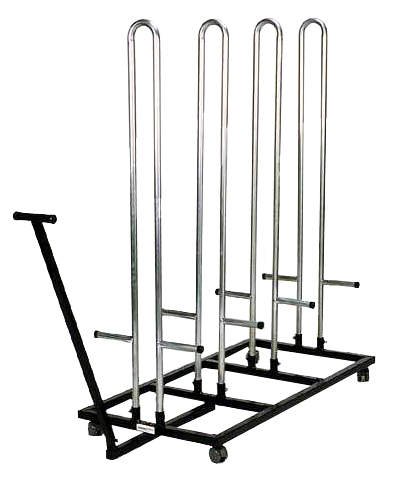
The Stackhouse 60 Shoulder Pad Cart focuses on mobility and ease of use. It holds up to 60 football shoulder pads and features a folding handle, which simplifies carrying and storage between practice fields and locker rooms. Non-marring caster wheels help protect floors, while the cart’s design emphasizes quick setup and simple pad management for coaches and equipment managers working with dynamic practice schedules.
Buying Guide: Shoulder Pad Storage Considerations
Capacity and configuration
Consider current and projected pad volume. Four-stack models maximize capacity in a single unit, while two-stack designs fit tighter spaces. If you also store helmets or other gear, a rack with additional hooks or a combined helmet rack may be advantageous.
Mobility and footprint
Lockers and practice areas often require moving gear between spaces. Models with swivel casters provide easy repositioning, but ensure caster quality and floor compatibility. For small spaces, measure the available width and height to avoid obstructions during operation.
Durability and materials
Look for tubular steel or reinforced steel frames for long life in busy environments. A solid base reduces tipping risk, and coatings that resist moisture help protect against rust in humid locker rooms or outdoor facilities.
Accessibility and organization
Hanging hooks for helmets or face masks, as well as clearly defined pad racks, improve accessibility. Units that keep pads off the floor reduce wear and make inventory checks faster for staff and players.
Mobility vs. static use
Mobile carts excel in dynamic practice settings or shared facilities, while stationary racks work well in fixed locker rooms with stable equipment flow. Balance the need for mobility with the available floor space and maintenance routines.
Safety and maintenance
Choose racks with rounded edges and stable bases to minimize accidents. Regular inspection of casters and joints helps maintain performance over time. Clean and dry gear before returning it to storage to extend rack life.
In summary, selecting the right shoulder pad storage solution depends on capacity needs, space constraints, and the facility’s movement patterns. The highlighted products provide a spectrum of options from large, four-stack racks to mobile carts, helping teams keep equipment organized and accessible for players and staff alike.
Add a Comment