When spending time on beaches, sandbars, or shallow coastal waters, a reliable sand bar anchor is essential for keeping your boat, jet ski, or kayak secure. The options below cover durable stainless steel designs, crossbars for better bite, and telescoping poles for adjustable depths. This guide highlights five top picks that balance strength, portability, and ease of use—helping you choose the right anchor for your vessel and typical shoreline conditions.
Summary at a glance:
| Product | Brand | Type | Weight / Length | |
|---|---|---|---|---|
| BeneLabel 17″ Sand Bar Anchor | BeneLabel | Stainless steel screw-in anchor | 17 in; 1.28 lbs | Removable T-handle for quick installation |
| Insaga 36″ Sand Anchor | Insaga | 304 stainless steel with crossbar | 36 in | Crossbar aids drilling; wide helix for grip |
| BeneLabel 36″ Sand Anchor | BeneLabel | Stainless steel screw-in | 36 in; 3.18 lbs | Long reach; fits multiple boats |
| Insaga 17″ Sand Anchor | Insaga | 304 stainless steel with crossbar | 17 in | Crossbar for easy drilling; broad applicability |
| Insaga Fully Welded Boat Anchor | Insaga | Fully welded, 304 stainless steel | 17 in | Non-slip handle and crossbar included |
BeneLabel 17″ Sand Bar Anchor

The BeneLabel 17″ sand bar anchor is crafted from high-strength 304 stainless steel, delivering corrosion resistance and impact strength suitable for beaches, shallow and deeper waters, and shoreline environments. With a compact 17-inch length, this anchor weighs 1.28 pounds and ships with a storage bag for easy transport. Its propeller-style design improves grip in loose sand, enhancing hold. A removable T-handle enables quick installation—attach the handle, screw into the sand, remove the handle, and secure the anchor. This model is ideal for smaller boats, kayaks, and jet skis operating near sandbars or shorelines.
Key features include: corrosion-resistant 304 stainless steel, portable 1.28 lb weight, propeller grip design, and a removable T-handle for fast setup. The anchor’s performance hinges on sand consistency and water depth; it excels in soft beach sand and shallow zones where a quick bite is needed. Users should ensure the anchor’s screw-in action is fully seated before relying on it in higher wind or current conditions.
Insaga 36″ Sand Anchor With Crossbar
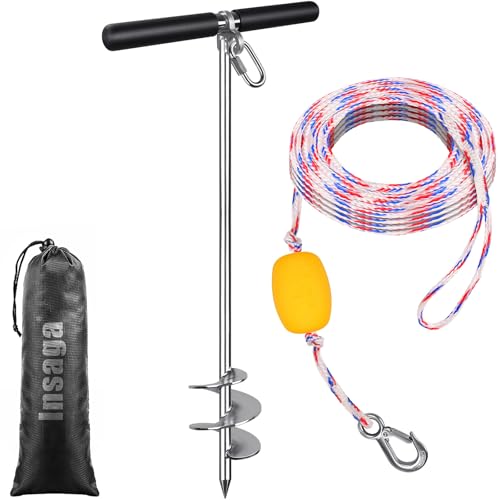
The Insaga 36″ sand anchor combines a solid 304 stainless steel core with a fully welded double-sided helix and a removable crossbar. The longer 36-inch pole length and the crossbar design improve penetration and grip in sand, making it suitable for beaches, shallow water, sandbars, and shoreline use. Its crossbar aids drilling into both soft and compact sand, stabilizing the anchor in a variety of watercraft scenarios from kayaks to small pontoon boats. This model is particularly flexible for users who need stronger anchoring in variable sand conditions and depths.
Notable aspects include: 304 stainless steel construction, 36″ length, fully welded helix, removable crossbar, and improved grip with the wider helix. It targets boaters needing reliable hold in sandy bottoms without requiring heavy equipment. For optimal results, ensure the anchor is fully engaged in sand before leaving it unattended in breezy conditions, and consider pairing with appropriate rope length to avoid undue strain.
BeneLabel 36″ Sand Anchor

The BeneLabel 36″ sand anchor is a robust stainless steel screw-in design designed for shallow waters, sandbars, and beaches. At 36 inches in length and roughly 3.18 pounds, it provides a longer reach and strong bite for larger craft or more demanding shoreline conditions. The 304 stainless steel construction resists corrosion and impact, making it suitable for a range of boats including motorboats and pontoons. The included storage bag supports transport and storage, reducing space constraints on board. Overall, this anchor suits boaters seeking extended reach and dependable hold in sandy bottoms.
Highlights include: a longer 36″ pole, sturdy 304 stainless steel, portability with a storage bag, and compatibility with multiple boat sizes. In use, ensure the anchor is properly screwed into the sand and secured; test its hold before leaving the vessel unattended, especially in windy or shifting sand conditions.
Insaga 17″ Sand Anchor With Crossbar

The Insaga 17″ anchor is designed for compact anchoring with a 304 stainless steel build and a crossbar for easier installation. Its 17-inch length makes it a good option for small boats, kayaks, and jet skis operating near sandbars or shallow shorelines. The crossbar helps drill the spike into the sand, increasing grip, while the stainless steel construction resists corrosion in marine environments. This anchor provides a balance of portability and reliability for lighter watercraft and shorter anchoring scenarios.
Key considerations include: 304 stainless steel, crossbar-assisted drilling, and suitability for a range of light craft. Users should assess sand compactness and water depth to determine whether this length delivers enough hold, especially in windy or current-heavy conditions.
Insaga Fully Welded Boat Anchor
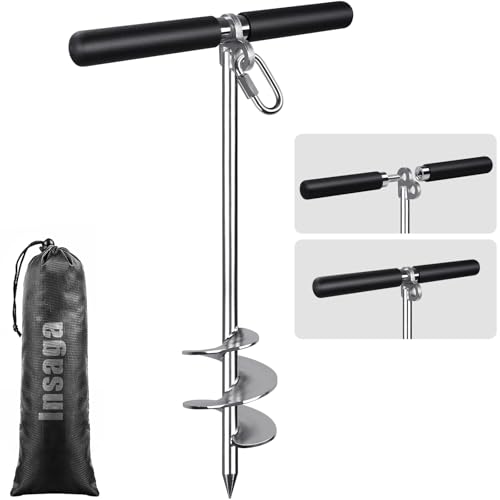
The Insaga fully welded 17-inch anchor is built from rust-resistant 304 stainless steel with a 12mm solid shaft and a fully welded double-sided helix. The design includes a cross bar for easy drilling and a 3-inch wider helix to enhance grip, reducing the risk of drifting in sandy shorelines. This anchor is versatile for boats, jet skis, kayaks, or pontoons in shallow coastal zones and beach settings. The non-slip handle improves handling during setup, contributing to reliable anchoring in variable beach conditions.
Highlights cover: hard-wearing stainless steel, a reinforced helix, cross bar, and a user-friendly non-slip handle. For best results, position the anchor’s helix firmly in the sand, test the hold under light loads, and re-embed if the sand shifts or waves increase.
Buying Guide: Key Purchase Considerations
- Material and corrosion resistance: Look for 304 stainless steel for durability in saltwater and beaches. Higher grades or fully welded designs offer longer service life in harsh coastal environments.
- Length and weight: Longer anchors (e.g., 36 inches) provide stronger holding power for larger boats but are heavier to handle. Shorter anchors are lighter and easier to deploy on smaller craft.
- Grip design: Helix or crossbar features improve penetration and grip in sand. A wider helix can secure the anchor more firmly, particularly in soft beach substrates.
- Installation method: Screw-in anchors with removable T-handle or crossbars allow quick setup. Ensure you can easily embed the anchor and retrieve it without excessive effort.
- Portability and storage: Storage bags and compact dimensions help keep your boat organized. Consider whether you need a compact kit for frequent transport.
- Boat compatibility: Confirm the anchor’s size and weight align with your vessel type (kayak, jet ski, pontoon, motorboat) and typical water depth.
- Shallow water suitability: Many sand anchors are designed specifically for shallow zones and sandbars. If you frequently anchor in varying depths, a longer model or adjustable design may be advantageous.
- Maintenance needs: Rinse after use and dry to prevent corrosion, especially in saltwater environments. Regular inspection of screws, helix, and crossbars is recommended.
- Storage considerations: A storage bag or case helps protect the anchor and keeps other gear organized on board or in a dock locker.
In sum, the best sand bar anchor choice depends on your vessel size, typical shoreline conditions, and how often you anchor in sand-heavy environments. Stainless steel anchors with crossbars or helices deliver dependable bite in both soft and compact sand, while telescoping or shorter models suit smaller craft and quick deployments. Always test hold in controlled conditions before venturing into rougher waters.
Add a Comment