Roberto Alomar’s early rookie cards remain popular among collectors who value 1980s baseball iconography and potential long-term appreciation. This article highlights five notable Alomar rookie-related cards, focusing on condition, presentation, and display value. Each pick comes with a concise overview, what to look for, and how it fits into a broader collection strategy for late 1980s baseball nostalgia.
style=”display:none;”>Summary Table of Selected Products
| Product | Brand | Highlights |
|---|---|---|
| 1988 Topps Traded Roberto Alomar Rookie Card #4T | Topps | Rookie card, protective display case |
| 1988 Topps Traded Baseball #4T Roberto Alomar Rookie Card | Topps | Official rookie card, top loader protection |
| 25 Assorted Roberto Alomar Baseball Cards | Topps, Upper Deck, Fleer, Donruss, Score | Bundle, variety of brands |
| Baseball MLB 1991 Stadium Club #304 Roberto Alomar Blue Jays | Stadium Club | Stadium Club series, Alomar |
Note: The following sections review each item with focus on authenticity, condition, display potential, and value within a well-rounded collection. Images and links point to the product pages for reference and verification.
1988 Topps Traded Roberto Alomar Rookie Card #4T

The 1988 Topps Traded Roberto Alomar Rookie Card #4T is a late-1980s rookie highlight featuring Alomar in his rookie phase. This specific card is commonly encountered in a protective acrylic top-load display case, which helps preserve corners and surface from handling. Collectors often seek sealed or protected examples that emphasize display readiness. For a focused Alomar collection, this card delivers classic 1980s aesthetics, a strong player association, and a clean presentation suitable for framing or gallery displays.
Key considerations include ensuring the card is correctly identified as a 4T variant, checking for any gloss loss or dimming, and confirming that the protective case does not obscure critical surface details. As a rookie-era card from Topps, it aligns with the era’s popularity among collectors who prize both item value and display quality. This card pairs well with other Topps rookies to tell a cohesive Alomar origin story.
1988 Topps Traded Baseball #4T Roberto Alomar Rookie Card

This card is classified as an official rookie card with Near Mint to Mint condition expectations, preserved in a protective top loader for display and protection. The 4T designation remains a sought-after subset for collectors who emphasize theTopps Traded line’s distinct late-1980s look. Buyers should evaluate centering, edge wear, and any surface imperfections that could affect grade potential. When paired with other 1988 rookies, this card adds depth to a beginner-to-mid-range Alomar collection and creates a narrative around Topps’ Traded series in that era.
25 Assorted Roberto Alomar Baseball Cards

This bundle includes 25 assorted Roberto Alomar baseball cards from multiple brands, including Topps, Upper Deck, Fleer, Donruss, and Score. The variety can offer a broader view of Alomar’s early career and trading card landscape, as well as opportunities to compare print quality, design changes, and condition across brands. When evaluating such bundles, assess the mix of rookies versus other years, the likelihood of common wear, and the presence of any high-grade cards within the set. Diversified bundles serve as practical entry points for new collectors building a robust Alomar portfolio.
Baseball MLB 1991 Stadium Club Roberto Alomar Blue Jays
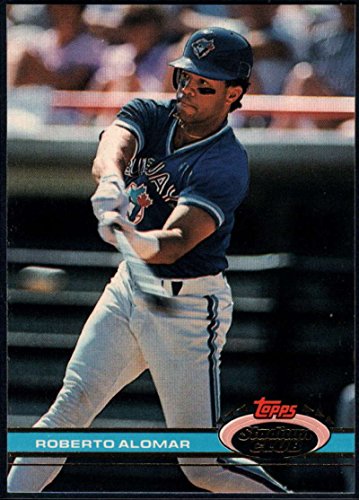
The 1991 Stadium Club card featuring Roberto Alomar with the Blue Jays offers a later-early-1990s perspective on his career trajectory. Stadium Club’s distinctive photography and print style provide collectible appeal beyond rookie status, potentially attracting players who value card aesthetics and rarity within a single-player focus. This card complements rookie-focused items by illustrating Alomar’s evolving image and market interest through a different brand narrative. Prospective buyers should examine image clarity, border condition, and any surface sheen that could influence grading or display quality.
Buying Guide
- Condition matters: For rookie-era cards, mint or near-mint grades typically command stronger interest. Inspect centering, corners, edges, and surface gloss, especially on Topps Traded variations.
- Authenticity and provenance: Verify product listings identify the correct card variant (4T vs. other 4T variants) and confirm any protective packaging remains intact to preserve value.
- Display value: Protected cases, top loaders, and display-ready formats can enhance appeal, particularly for collectors who want immediate wall-ready or shelf-worthy pieces.
- Brand and series context: Topps Traded cards from 1988 carry strong collector nostalgia. Bundles with multiple brands broaden context and price dynamics, but may require more careful sorting for grade consistency.
- Rarity versus accessibility: Single, high-grade rookie cards may be more collectible, while bundles diversify exposure to market conditions and pricing.
- Completeness of a set: For a focused Alomar collection, building around a core of rookie-era cards helps maintain a cohesive narrative while allowing room to add later cards from notable years.
- Market trends: Card values can shift with player milestones, retrospectives, or hall-of-fame considerations. Monitor collector demand and condition-driven pricing to time acquisitions.
- Storage and protection: Use acid-free holders and climate-controlled storage to protect surfaces and prevent degradation over time.
- Verification sources: Cross-check card details with reputable guides and seller listings to ensure you’re acquiring authentic rookies and not reprints or altered items.
- Budget strategy: Start with a solid baseline collection of rookies, then selectively add premium pieces for parity with your budget and display goals.
Add a Comment