Training for self defense often starts with safe, realistic tools. This guide highlights top plastic knife options designed for practice, Krav Maga, Kali, and general self-defense training. Learn what makes each a safe, effective training aid and how to choose the right option for solo or group sessions.
| Product | Brand | Key Feature |
|---|---|---|
| MACS 8.25″ Plastic Training Knife Open Folder Style | MACS | Rounded edges, durable, ideal for light to medium contact |
| Shomer-Tec Emerson Non-Metallic Kerambit | Shomer-Tec | GV6H composite, fixed blade, non-metallic |
| MACS Plastic Boot Training Self Defense Knife 10.75″ | MACS | Grip-enhanced hilt, safe training, robust for demonstrations |
| MACS Set of 2 Polypropylene Karambit 6.5″ | MACS | Raised grip webbing, rounded tip, safe solo practice |
| MACS 8.75″ Karambit Black Plastic Blunt | MACS | Rounded tip, dull edges, reinforced grip |
MACS 8.25″ Plastic Training Knife Open Folder Style

Overview: This training knife features a solid one-piece design with rounded edges for light to medium contact training. The molded construction provides durability to handle repeated practice sessions while maintaining a safe training environment. The rounded tip and textured hilt offer a realistic feel without sharp edges, making it suitable for Krav Maga, Kali, airsoft, and general self-defense drills. The design emphasizes safety while preserving authentic handling and balance for demonstrations and solo practice.
Key considerations: Choose this option if you want a compact, safe practice blade with a foldable style that still delivers a credible feel. Ideal for beginners through intermediate practitioners focused on form, footwork, and controlled strikes.
Shomer-Tec Emerson Non-Metallic Kerambit
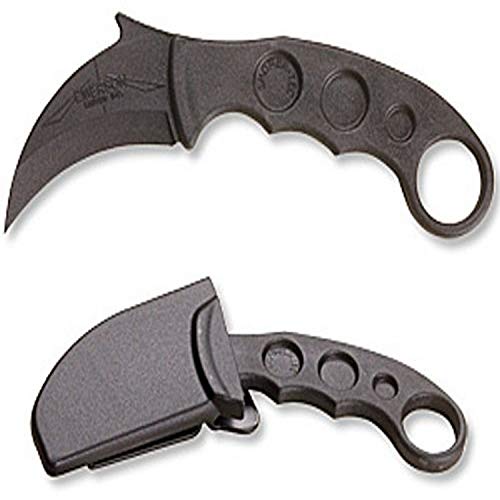
Overview: This non-metallic kerambit uses GV6H 60% glass fiber composite, offering a realistic size and feel while staying non-metallic. As a fixed blade variant, it is designed for safe training scenarios that mimic real-world karambit movements without the hazards of a sharp edge. It’s a solid choice for practitioners focusing on grip-based defense techniques and draws, with a compact blade profile suitable for solo practice or small-group drills.
Key considerations: Select this model if your priority is a non-metallic karambit with a fixed blade feel. It’s well-suited for technique drills that depend on grip, retention, and angular entry movements while keeping injury risk minimal.
MACS Plastic Boot Training Self Defense Knife 10.75″
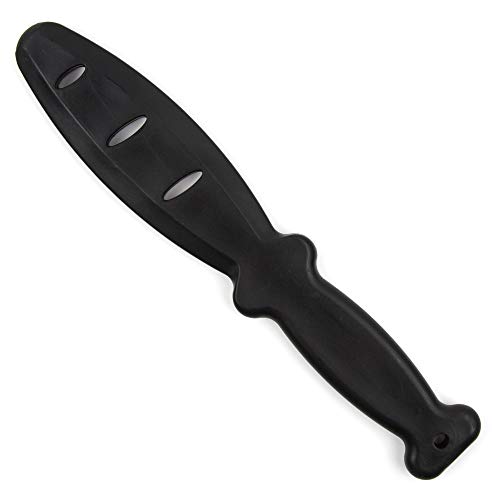
Overview: This boot-length training knife emphasizes a guard-friendly hilt with enhanced grip. Its durable, one-piece construction supports heavy practice, including Krav Maga and military-style drills, while the safe, dull blade minimizes injury risk. The design aims to balance realistic handling with reliable safety, making it suitable for demonstrations and controlled self-defense scenarios.
Key considerations: Ideal for practitioners who want a longer plastic blade with a sturdy grip and a compact overall size. Great for boot or leg-level drills and extended practice sessions that require a more substantial blade presence.
MACS Set Of 2 Polypropylene Karambit 6.5 Inch

Overview: This two-pack includes polypropylene karambits with raised grip webbing and a rounded training tip. The design supports Krav Maga and self-defense practice, providing a credible feel while ensuring safety during solo drills and demonstrations. The raised grip helps secure handling during dynamic movements and transitions between holds.
Key considerations: Consider this option when you want multiple identical training karambits for paired drills or rotation in group training. The dual-pack saves time for instructors and provides backup practice tools for students.
MACS 8.75″ Karambit Martial Arts Black Plastic Blunt

Overview: This blunt karambit features a safe rounded tip and a dull edge, with a raised grip on the hilt for improved control. It’s designed for solo practice and tactical demonstrations, offering a credible karambit experience without risk of lacerations. The plastic construction makes it a durable option for repeated drills and technique development in self-defense training.
Key considerations: Choose this blade if you want a more substantial karambit feel with safe geometry for frequent practice. The compact to medium blade length supports quick strikes, defensive counters, and fluid transitions.
Buying Guide: How to Choose a Plastic Self-Defense Knife
- Safety first: Look for blunt or rounded tips and non-sharp edges. Ensure the blade is plastic or composite and designed specifically for training to minimize injury risk during drills and demonstrations.
- Material and durability: Polypropylene or other high-grade plastics provide impact resistance for repeated sessions. Avoid brittle plastics that crack under pressure.
- Grip and handling: Raised webbing, textured grips, and ergonomic hilts improve control during fast movements and transitions. A secure grip reduces the chance of slips during drills.
- Size and balance: Choose blade lengths that fit your training style—shorter blades for precise, close-quarters drills; longer kits for draw-and-stab simulations. Balance affects realism and technique accuracy.
- Training scope: Consider whether you need a karambit, fixed blade, or boot-style knife. Karambits emphasize grip control and angle work; fixed blades often better simulate draw-and-attack drills.
- Solo vs. partner drills: Some models are optimized for solo practice with demonstrations in mind, while others are suitable for paired exercises. Plan how you’ll train to select the best fit.
- Maintenance and safety accessories: Check if a sheath or holster is included for safe transport. Proper storage helps protect materials and users alike.
- Regulatory and setting considerations: Some jurisdictions restrict realistic knives in public spaces. Use these tools in appropriate, private training areas to ensure compliance with local laws.
Add a Comment