When shopping for a climbing rope by the foot, choose options that match your activity, environment, and weight tolerance. This guide highlights practical, foot-length rope choices for practice, arborist work, and light assisted climbing. These selections are best for beginners needing control, hikers and tree workers seeking reliability, and climbers who want compact lengths for easy transport.
The top five picks below are evaluated for visibility, durability, length options, and ease of handling. Use the quick-reference table to compare core details at a glance.
| Product | Best For | |
|---|---|---|
| NorthPada 3/8 in x 16 ft Practice Rope | 16 ft | Rock climbing practice and knot training beginners |
| AOLEBA 10.5 mm Static Rope | 10 m, 20 m, 30 m, 50 m, 70 m | All-weather practice and rescue prep with high visibility |
| GINEE 10 mm Static Rope | 35 ft, 50 ft, 100 ft, 150 ft, 200 ft, 250 ft | Longer fixed-line setups and rigging |
| X XBEN 10.5 mm Static Rope | 32 ft | Tree climbing, arborist work, and quick-draw setups |
| NewDoar Static Climbing Rope 8mm/10mm | 20 ft, 50 ft, 100 ft, 165 ft | Lightweight, packable rope for camping and small climbs |
NorthPada 3/8 in x 16 ft Practice Rope

Rope Specifications: 3/8 inch diameter and 16 feet in length, designed for versatile outdoor uses such as rock climbing practice, knot tying, rappelling, and arborist tasks. The high-visibility orange color helps keep the rope easy to locate in varied environments.
Who it’s best for: beginners or hobby climbers needing a compact practice rope for indoors or backyards. Why: its short length makes it easy to manage and store, reducing handling complexity for new users.
Caution: With a 16-foot length, it may be inadequate for experienced rappelling or long down-hill descents where longer lines are required.
AOLEBA 10.5 mm Static Climbing Rope

Rope Details: 10.5 mm static rope with options up to 70 m, designed for rock climbing, escape scenarios, and rescue training. It includes a drawstring bag and CE EN 892:2012+A2:2021 certification, with bright color for visibility.
Who it’s best for: climbers needing a longer, certified static rope for training, rescue practice, or tree work. Why: CE certification and multiple length options support varied setups.
Limitation: Static ropes are not suitable for dynamic climbing where significant dynamic elongation is desired; plan your use accordingly.
GINEE 10mm Static Climbing Rope
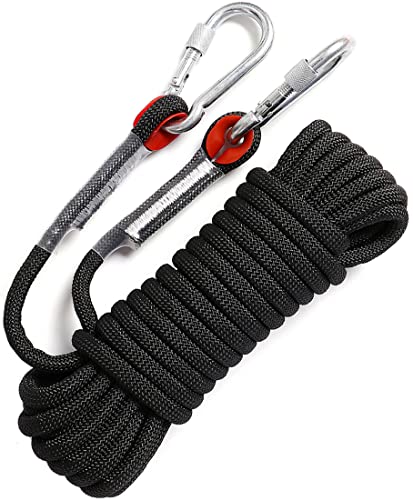
Features: 10 mm diameter static rope available in 35 ft to 250 ft lengths, with two plastic protection rings and a high-strength polyester multi-core structure.
Who it’s best for: arborists and climbers needing longer, fixed-line options for rigging or rescue training. Why: multiple length choices and reinforced construction support heavier use.
Caution: Data does not specify elongation; consider planned load and dynamic needs when choosing length.
X XBEN Rock Climbing Rope

Features: 10.5 mm static rope with low stretch (up to 4% elongation), double-braid construction, and strong abrasion resistance. Designed for rescue, tree rigging, canyoneering, and fixed-line work.
Who it’s best for: tree climbers and rescue personnel needing predictable control on descents. Why: low stretch helps reduce bounce during lowering and rigging operations.
Caution: Higher-end use requires familiarity with double-braid handling; ensure proper knot and belay technique.
NewDoar Hand Ascender & Foot Ascender Set

Product mix: Hand ascender and foot ascender with adjustable loops, CE-certified for safety. The aluminum hand ascender is lightweight, with a 140 kg weight limit and 8.5 kN breaking strength. The foot loop is adjustable and compact.
Who it’s best for: climbers and arborists seeking a compact, integrated ascender system for rope work. Why: combined set reduces gear clutter and supports efficient ascent.
Caution: Verify compatibility with your rope diameter (8–13 mm is common) and ensure proper locking mechanisms during operation.
NewDoar Climbing Sling Foot Ascender Set
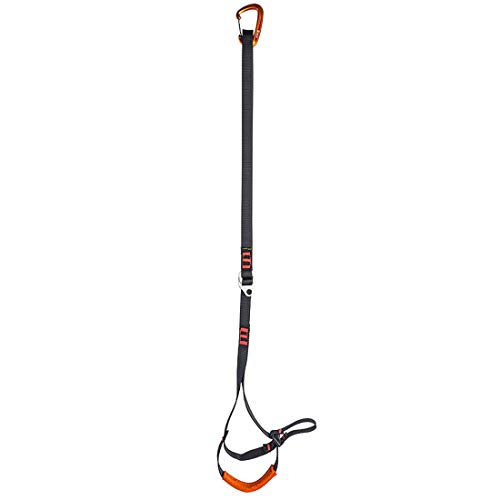
Features: Adjustable foot sling with carabiner hooks, CE certification, and adjustable buckle for length customization. Dimensions and weight support moderate climbs and expeditions.
Who it’s best for: climbers needing a compact foot-loop system for rope ascents and rigging. Why: lightweight design and adjustable length improve handling. Limitation: ensure compatibility with your rope clamp and overall setup before use.
X XBEN 10.5 mm UIAA Dynamic Rope 45M

Rope Highlights: 10.5 mm UIAA dynamic rope with 45 m length. Core and sheath construction provide strength, color clarity for visibility, and durability for climbers needing a longer dynamic rope for varied terrains.
Who it’s best for: climbers needing a longer dynamic rope for top-roping or rescue scenarios. Why: credible construction and appropriate diameter for general climbing tasks.
Caution: Ensure dynamic rope use aligns with your fall protection plan and friction-reducing practices; static options may be more appropriate for fixed-line work.
NewDoar Static Climbing Rope – 8mm/10mm

Rope Range: 8 mm and 10 mm static ropes offered in 20 ft, 50 ft, 100 ft, and 165 ft lengths. Constructed from high-quality polyester with ASTM-compliant safety tests. Suitable for hauling, prusik, and outdoor climbing tasks.
Who it’s best for: enthusiasts needing compact, durable static lines for practical ascent aids and gear-hauling. Why: pre-cut lengths enable quick setup and transport.
Caution: Static ropes should not be used as dynamic belay lines where fall absorption is required; choose according to activity type and safety plan.
Buying Guide: Key Considerations For Choosing A Foot-Length Climbing Rope
- Length needs: Short ropes (like 16 ft) are ideal for practice, knot-tying, and training setups. Longer lengths (30–70 m) suit fixed lines, rescue, arborist work, and longer descents.
- Rope type: Static ropes minimize stretch and are better for hauling and fixed-line work. Dynamic ropes absorb more fall energy and are suited to lead climbing and top-roping.
- Diameter and strength: Thicker ropes offer durability and grip but weigh more; ensure compatibility with your ascenders, belay devices, and carabiners.
- Certification: Look for CE EN standards for static ropes and UIAA markings for dynamic ropes to verify safety benchmarks.
- Visibility: Bright colors help track line position in outdoor environments and in low-light conditions.
- Handling and maintenance: Consider core-and-sheath construction for abrasion resistance and ease of knot tying. Store clean and dry to prolong life.
- Best-use scenarios: Training and practice ropes are often best short or mid-length, while rigging and rescue lines benefit from longer, higher-strength options.
FAQ
- What length rope is best for beginners training knots?
Short to mid-length ropes (around 16–50 ft) are easier to manage for knot training and basic practice.
- When should I choose a static rope over a dynamic rope?
Choose static for fixed lines, hauling, or arborist work where minimal elongation is desired. Dynamic ropes are better for activities with potential falls, like lead climbing.
- Is CE certification important for climbing ropes?
Yes. CE certifications document compliance with safety standards and quality controls for intended uses.
- Can I use a foot-long rope for rappelling?
Short ropes can be used for practice and short rappels, but ensure the rope length and dynamic/static properties match the rappelling setup and safety plan.
- What is a good diameter for tree-work ropes?
Ropes around 10 mm offer a balance of strength and handling for arborist tasks, with higher strength variants available for demanding work.
- Are all foot-length ropes suitable for climbing outdoors?
Not necessarily. Verify length, diameter, rate of stretch, and certifications to ensure they fit your weather and terrain needs.
Add a Comment