Finding a reliable hopper that feeds consistently and fits your marker can dramatically impact your performance on the field. The following guide highlights five proven options that balance capacity, reliability, and ease of use. Each entry includes key features to help you compare quickly and decide which loader best fits your play style, whether you’re playing woodsball, rec, or tournament pace.
| Product | Brand | Capacity | Notes |
|---|---|---|---|
| Maddog 200 Round Gravity-Fed Hopper | Maddog | 200 rounds | Gravity-fed, battery-free, universal compatibility |
| JT Paintball Hopper XX-Large | JT | 200 rounds | Clear spring-loader lid, simple construction |
| Valken Gotcha 120 Round Loader | Valken | 120 rounds | Anti-jam feature, compact 50 cal option |
| Maddog Empire Halo Too | Maddog | 180-200 rounds | Electronic, high feed rate, belt-drive |
| Maddog 150 Round Bones Pods (6 Pack) | Maddog | 150 rounds per pod | Spring-loaded, fast reloads, portable backup ammo |
Maddog 200 Round Gravity-Fed Hopper
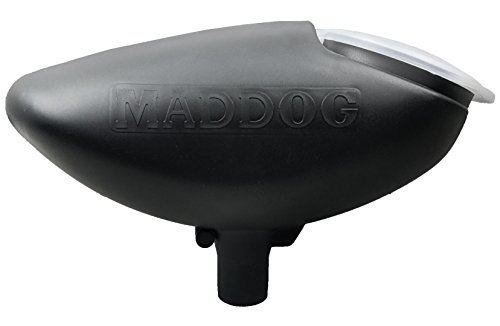
The Maddog 200 Round Gravity-Fed Hopper is designed for marker compatibility and straightforward maintenance. It holds up to 200 rounds of .68 caliber paintballs and feeds without batteries, supporting a dependable eight balls per second in gravity-fed operation. The flip-top lid speeds up reloads, making it a practical option for scenarios that require quick, reliable feeding during extended games. Its split-shell construction allows thorough cleaning, which helps maintain performance over time. This loader fits a wide range of standard markers, including Tippmann, JT, Azodin, HK Army, and Spyder models, providing universal compatibility for diverse setups.
JT Paintball Hopper XX-Large

The JT Paintball Hopper XX-Large offers a straightforward, no-frills design focused on reliability. With a 200-ball capacity and a clear spring-loader lid, users gain easy visibility into remaining paint. The plastic construction keeps weight down, making it a practical choice for players who want a simple, durable hopper that won’t slow them down during a match. Its simplicity can be a benefit in fast-paced games where fewer moving parts mean fewer maintenance concerns.
Valken Gotcha 120 Round Loader

The Valken Gotcha 120 Round Loader is designed for compact 50 cal paintball setups with a 120-round capacity. Its anti-jam feature helps maintain smooth feeding under pressure, which can be valuable in scenarios that demand consistent feed rates. This loader’s size and mechanism make it a practical option for players who need a lighter weight solution that still supports reliable performance during longer games.
Maddog Empire Halo Too Automatic Electronic Loader

The Halo Too is a high-performance electronic loader designed for tournament-style play. This model feeds 20+ balls per second and uses a belt-drive system with a sound-activated feed. It includes a rechargeable feed stack monitoring system, an onboard computer to regulate motor speed and microphone sensitivity, and a robust polycarbonate shell capable of withstanding field wear. While it sits at the higher end of the price spectrum, its advanced features support rapid, consistent feeding in competitive environments.
Maddog 150 Round Bones Pods (6 Pack)
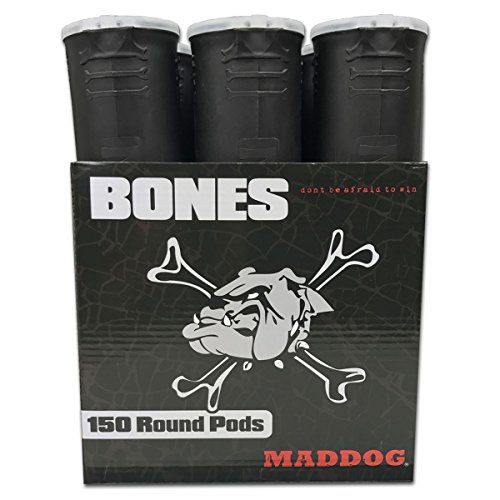
The Maddog Bones Pods are designed for quick reloads on the move. Each pod holds approximately 150 rounds in a durable, collarless polypropylene shell with a spring-loaded flip-top lid and raised “Bones” grips for faster, no-look reloads. Sold as a 6-pack, these pods are ideal for players who want to maximize their reload capacity during longer matches without carrying bulky inner-tiller hoppers. They pair well with a primary hopper for extended play.
Buying Guide: Key Considerations for 50-Round and Higher Hoppers
- Hopper capacity vs. weight: Higher-capacity hoppers reduce reloads but add bulk and weight. Consider your marker balance and gaming style to strike the right balance between capacity and handling.
- Feeding mechanism: Gravity-fed designs rely on gravity to feed rounds and require no batteries, while electronic loaders offer higher feed rates and consistent performance but require batteries and maintenance.
- Marker compatibility: Ensure the hopper is compatible with your marker’s feeding port and feed neck size. Universal compatibility is convenient for players with multiple markers.
- Reload efficiency: Flip-top lids, clear lids, and ergonomic grips speed up reloads. A lid that opens quickly and stays open during reloading can shave seconds off reload times.
- Durability and materials: Polycarbonate shells and reinforced shells handle impacts during transport and play. A well-built hopper lasts longer under rough field conditions.
- Cleanability: Removable shells or split-shell designs facilitate thorough cleaning, prolonging performance and preventing paint jam buildup.
- Noise and feed reliability: Some electronic loaders are quiet and designed to minimize jams, which can be an advantage in close-quarters play or stealth scenarios.
- Power needs: Battery-powered loaders require regular charging or battery replacements. Plan for battery life during long events and consider spares or rechargeable options.
- Accessory ecosystem: Pods, extra lids, and replacement parts can influence long-term value. A compatible ecosystem makes maintenance easier and cheaper over time.
When selecting a hopper for 50-round or larger use, balance capacity with reliability, weight, and ease of maintenance. For players who prioritize minimum downtime, electronic options like the Halo Too provide high feed rates and advanced diagnostics, while gravity-fed or simpler hoppers offer dependable performance with minimal upkeep. Pod systems complement primary hoppers by enabling rapid, on-field reloads during extended play.
Add a Comment